
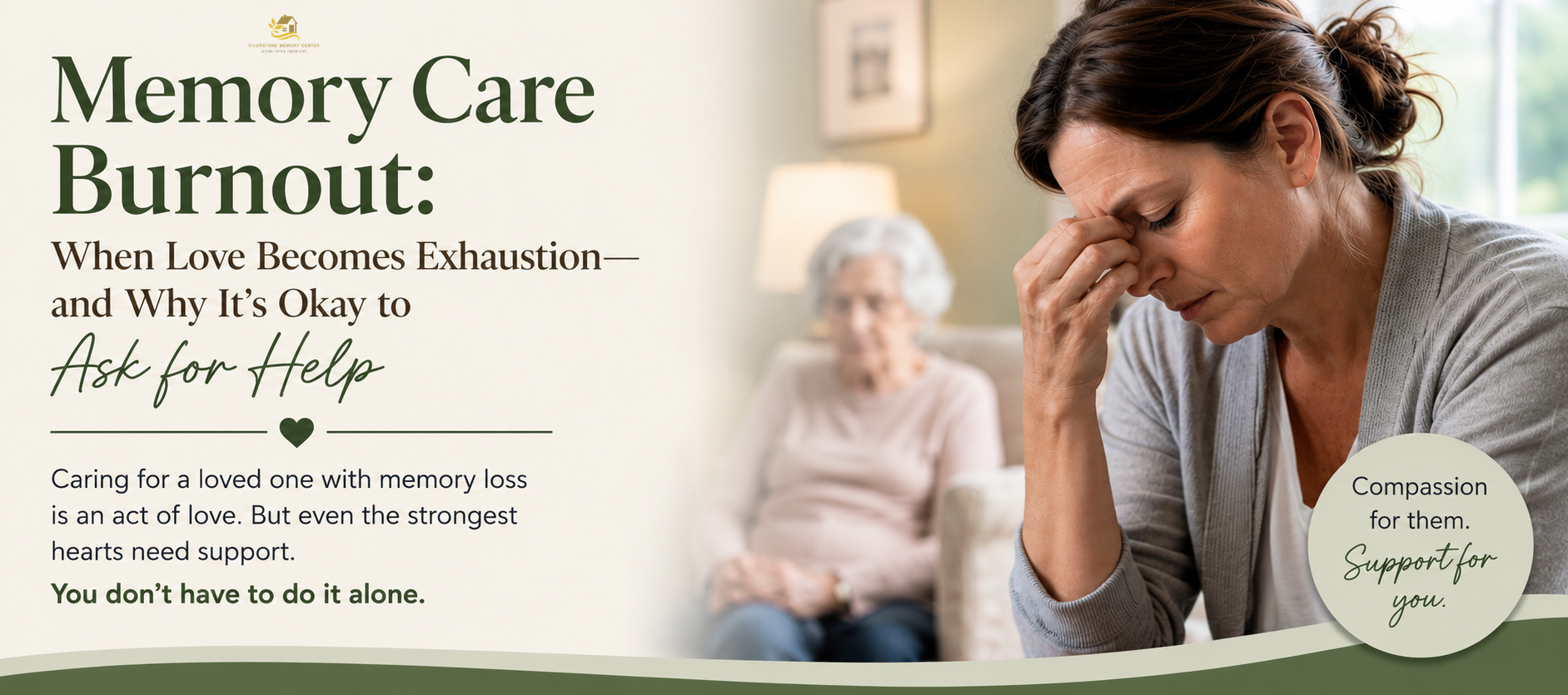
Memory Care Burnout: When Love Becomes Exhaustion—and Why It's Okay to Ask for Help
When someone you love is living with Alzheimer's disease or another form of dementia, you don't stop being their spouse, son, daughter, or friend. But somewhere along the journey, you also become their caregiver.
It's a role that most people never expected to have—and one that can quietly consume every part of life.
If you've found yourself feeling exhausted, frustrated, guilty, or emotionally numb, you're not alone. What you're experiencing may be caregiver burnout, and it's far more common than many families realize.
What Is Caregiver Burnout?
Caregiver burnout is a state of physical, emotional, and mental exhaustion caused by the ongoing demands of caring for another person. Unlike ordinary stress, burnout doesn't disappear after a good night's sleep.
Many caregivers don't notice it happening until they realize they no longer recognize themselves.
You may find yourself thinking:
• I'm always tired.
• I can't remember the last time I did something for myself.
• I feel guilty no matter what I do.
• I'm losing patience.
• I love them, but I don't know how much longer I can do this.
These thoughts don't make you a bad caregiver. They make you human.
The Hidden Grief of Dementia
One of the hardest parts of dementia is grieving someone who is still physically present. Every stage of dementia asks families to adjust again, creating a cycle of ongoing grief that many people don't recognize. This emotional weight is exhausting.
Signs You May Be Experiencing Burnout
Burnout looks different for everyone, but common warning signs include:
• Constant fatigue—even after resting
• Trouble sleeping
• Feeling overwhelmed by small tasks
• Irritability or impatience
• Anxiety or depression
• Forgetting your own medical appointments
• Losing interest in hobbies or friendships
• Feeling isolated
• Changes in appetite
• Feeling guilty whenever you take a break
Why Families Wait Too Long
Many families promise they will never move a loved one into memory care. These promises come from love, but dementia changes what one person can safely provide. Choosing memory care is not giving up—it can be the safest and most compassionate path for everyone involved.
Caring for Yourself Is Caring for Your Loved One
You cannot pour from an empty cup. Simple ways to reduce burnout include:
• Accept help when it's offered.
• Stay connected with friends and family.
• Join a caregiver support group.
• Schedule regular breaks.
• Prioritize your own medical appointments.
• Get enough sleep whenever possible.
• Talk openly about your feelings.
When Memory Care Can Help
Professional memory care doesn't replace family—it expands your caregiving team. Families often rediscover the joy of simply being present with their loved one instead of carrying every responsibility alone.
You're Not Failing—You're Facing One of Life's Hardest Journeys
There is no perfect caregiver. Only people doing their best with incredibly difficult circumstances.
If you're feeling burned out, overwhelmed, or unsure what comes next, know that asking for help is not a sign of weakness. It's a sign of love.
At Riverstone Memory Center, we're here not only for those living with dementia—but for the families walking this journey beside them. Because caring for the caregiver is part of caring for the resident.